

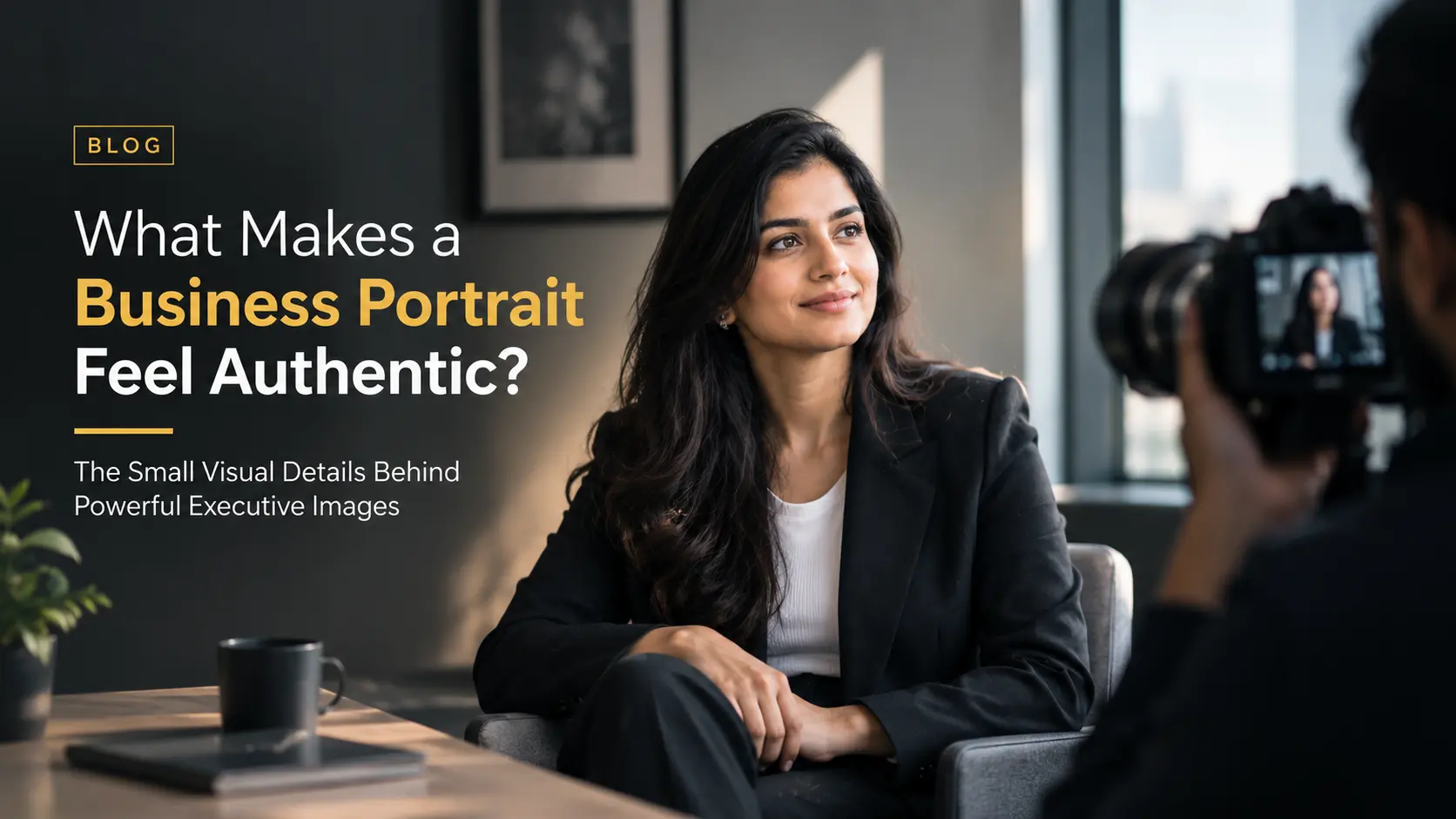
A business portraits is more than a carefully composed image. It is a visual introduction to the person behind the professional title. When expression, posture, lighting and composition work naturally together, the result feels polished without looking posed.
A relaxed expression, natural posture, suitable clothing, thoughtful framing and well-balanced lighting can all make a portrait feel more genuine. These details do not need to be dramatic. Often, simple adjustments are enough to make an executive look confident and comfortable without making the image feel overly posed.
This is especially important in corporate portrait photography, where the goal is to present an executive or professional in a polished way while still showing their personality. A well-made portrait can be used across company websites, LinkedIn profiles, leadership pages, speaker profiles, press materials and corporate presentations, so it needs to look professional while still feeling natural.
Why Authenticity Matters in Business Portraits
A professional portrait is often the first visual introduction to an executive, founder or professional. While an overly posed image can feel unnatural, a too-casual portrait may not suit a professional setting.
An authentic business portraits strikes the right balance. It should look polished and intentional while still reflecting the person’s natural expression and personality.
This is particularly important in corporate photography UAE, where portraits may be used across leadership pages, LinkedIn profiles, company websites, media materials and corporate presentations. The visual style should remain consistent with the brand while allowing each individual to look natural.
The Small Visual Details That Make an Executive Portrait Feel Natural
Facial Expression
A natural expression can make an executive portrait feel more genuine. A subtle smile or calm, composed look often works better than a forced expression. Photographers can use conversation and multiple frames to capture expressions that feel natural to the individual.
Posture and Body Language
Posture influences how confident and comfortable a person appears. Relaxed shoulders, natural hand placement and a slight change in body angle can prevent the portrait from looking stiff. The pose should suit the person’s role and personality rather than follow a fixed formula.
Eye Direction
Looking directly at the camera creates a clear and engaging portrait that works well for leadership profiles and professional headshots. Looking slightly away can give the image a more editorial feel. The choice should depend on the purpose and composition of the portrait.
Clothing and Personal Style
Clothing should suit the person’s role, company culture and the purpose of the portrait. Formal or business-casual styles can both work when they feel appropriate. Good fit, suitable colours and minimal distractions help keep attention on the subject.
Small Gestures
Simple details such as relaxed hands, natural shoulders and a slight change in body position can make a portrait feel less staged. Capturing several variations also gives the photographer more opportunities to find a natural and authentic frame.
How Lighting Can Change the Feeling of a Business Portraits
Lighting affects the appearance, mood and depth of an executive portrait.
Soft, controlled lighting can create a polished appearance, which may work well for professional profiles and company websites. More directional lighting can introduce depth and definition, creating a stronger editorial character.
The right approach depends on the individual and the purpose of the image. Lighting should complement the person’s features rather than become the most noticeable element of the photograph.
Consistency is particularly important when photographing several executives. If the portraits will appear together on a leadership page, they should share a broadly consistent lighting approach.
At the same time, consistency does not require every person to look identical. A skilled executive portrait photography approach can maintain the same visual framework while making small adjustments according to each subject.
Why the Background Matters More Than You Think
A background can either support a portrait or distract from it.
A clean studio background keeps attention on the subject and works well when a company wants a straightforward professional image. An office environment can provide context, showing where the executive works.
Architectural spaces can introduce more visual character, while branded environments can connect the portrait with the company’s identity.
The important consideration is control. A background should provide useful context without competing with the person.
Depth of field can also be used to separate the subject from the surroundings. A softly blurred office can retain the feeling of a workplace while keeping attention on the executive.
The choice should ultimately reflect the person’s role, the company and the intended use of the image.
How Composition Helps an Executive Portrait Feel Authentic
Composition determines how the subject sits within the frame and how easily the image can be used across different formats.
A head-and-shoulders composition is often suitable for LinkedIn profiles, professional directories and company leadership pages. A mid-length portrait allows more room for body language and clothing.
Environmental portraits can go further by placing the executive within their workplace or another relevant setting.
Negative space can also be useful. Leaving some space around the subject can make the image easier to incorporate into a website layout, presentation, article or corporate publication.
Camera angle and distance matter as well. Moving slightly closer, stepping back or changing the camera position can alter the relationship between the subject and the surrounding environment.
This makes corporate headshot photography about more than simply capturing a person’s face. The photographer needs to consider the complete frame and how the final image will be used.
How to Balance Professional Direction With Natural Expressions
A natural portrait still needs professional direction. Simple guidance on posture, hand placement, body angle and eye direction can help the subject feel more comfortable.
Instead of forcing one pose, photographers can make small adjustments and capture several variations. Conversation can also help the subject relax and produce more natural expressions.
The goal is not to create a perfect pose, but to create the right conditions for an authentic expression.
Creating Consistent Executive Portraits Across a Company
When photographing multiple executives, consistency in lighting, framing, background and image quality helps to create a cohesive visual style across leadership pages, websites and presentations.
However, consistency should not mean making everyone look identical. Individual expressions, poses and personalities should remain visible.
A consistent photography style with room for individual character creates a professional yet natural collection of executive portraits.
Where Authentic Executive Portraits Can Be Used
A professionally produced executive portrait can support several areas of corporate communication.
Common uses include:
- Company leadership pages
- About and team pages
- LinkedIn profiles
- Speaker biographies
- Conference profiles
- Press releases
- Media kits
- Corporate presentations
- Annual reports
- Social media profiles
Planning these uses before the photography session can be helpful. For example, a portrait intended for a website banner may require more negative space than an image intended for a LinkedIn profile.
Considering these requirements in advance can give the photographer more flexibility when composing the images.
Why Choose Insight Pictures for Corporate Portrait Photography?
A strong corporate portrait requires more than good camera equipment. The photographer needs to consider how lighting, composition, background, posture and expression work together.
Insight Pictures focuses on these elements when creating professional portraits for businesses and executives. The approach combines visual consistency with attention to the individual, helping each subject look professional without losing their natural character.
Whether the requirement is for executive portraits, professional headshots or team photography, the session can be planned around the company’s visual identity and the intended applications of the images.
For businesses looking to create or refresh their professional portrait library, Insight Pictures can provide a considered approach to corporate headshot photography, from lighting and composition to posing and final image selection.
Conclusion
An authentic business portraits is created through a combination of small visual decisions.
Expression, posture, eye direction, clothing, lighting, background and composition all influence how a person appears in the final image. When these elements are carefully balanced, the portrait can remain polished without becoming overly staged.
The purpose of corporate portrait photography is not to make every executive look the same. It is to create a professional visual standard while allowing each person’s individuality to remain visible.
That balance makes a portrait more versatile for company websites, leadership profiles, LinkedIn, presentations, media materials and other professional applications.
H2 : Frequently Asked Questions
● What makes a business portraits look authentic?
An authentic business portraits combines professional presentation with natural expression and body language. Relaxed posture, appropriate clothing, suitable lighting and thoughtful composition can help the subject appear comfortable without making the photograph look casual.
● How should an executive pose for a professional portrait?
An executive should generally maintain an upright but relaxed posture. Shoulders should not appear tense and the hands should be positioned naturally. The pose should also reflect the person’s professional role and the intended use of the photograph rather than following a fixed formula.
● What background is best for corporate headshots?
A clean background works well when the focus needs to remain entirely on the subject. Office and architectural backgrounds can provide additional context. The best choice depends on the company’s visual identity, the executive’s role and where the photograph will be used.
● Should business portraits always look formal?
No. The appropriate level of formality depends on the profession, company culture and purpose of the portrait. A formal image may suit a corporate leadership page, while a more relaxed portrait may be appropriate for an editorial feature or creative business.
● What is the difference between corporate headshot photography and business portraits photography?
Corporate headshots generally use tighter framing, often focusing on the head and shoulders. They are commonly used for professional profiles, company directories and LinkedIn. Business portraits can use wider framing, different poses and environmental settings to communicate more about the person’s role, personality and workplace.